


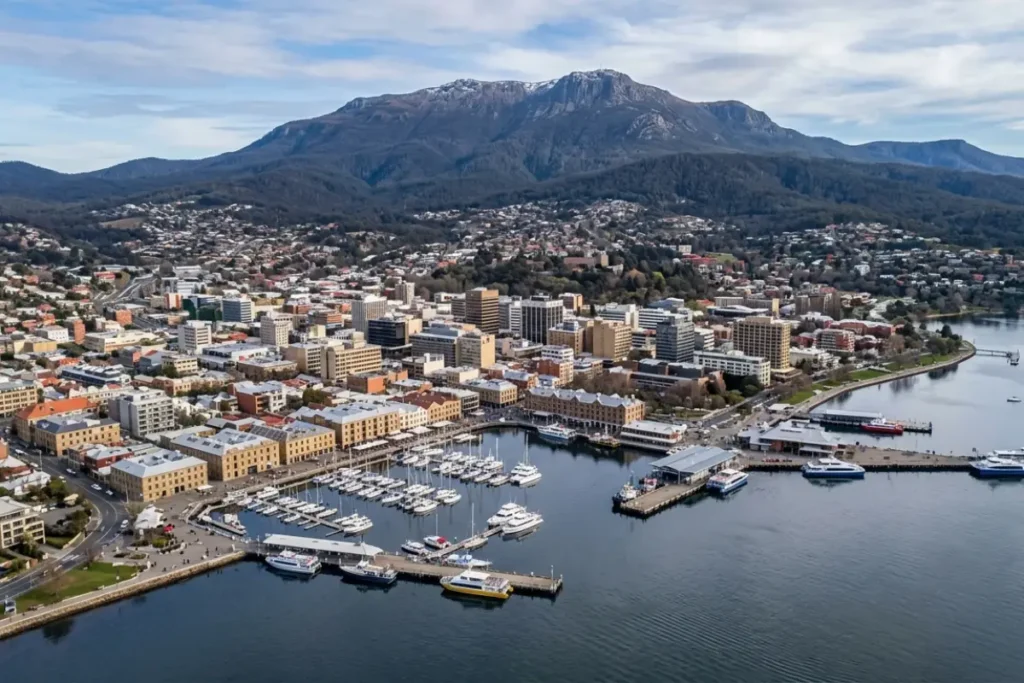
Tasmania rewards slow travel more than almost any state in Australia. The roads are narrow, the coastline doubles back on itself constantly, and the towns worth stopping in rarely sit on a straight line between airports.
Most trip-planning content treats “how long do I need” and “where do I actually go” as separate questions. They are not. The towns you pick decide the days you need, and the days you have decide which towns make the cut.
This guide answers three things in order: which towns earn the “prettiest” label and why, how many days that actually requires once you account for driving time, and how to turn that into a route you can book with confidence.
The Prettiest Towns in Tasmania, Ranked by What Makes Them Worth the Detour
“Prettiest” is subjective, but it is not random. The towns that consistently top traveler lists share three traits: dramatic natural backdrop, walkable historic core, and a reason to linger beyond a photo stop.
Richmond
Richmond sits 25 minutes from Hobart and looks frozen in the 1830s. The sandstone Richmond Bridge, Australia’s oldest road bridge still in use, anchors a village of colonial cottages, vineyards, and a working bakery older than most countries.
It earns its spot because it delivers heritage Tasmania in under an hour from the capital. You do not need a full day here, but you do need at least a slow morning.
Stanley
Stanley sits at the base of the Nut, a volcanic plug that rises straight out of the sea. The town below is a single grid of fishermen’s cottages facing Bass Strait, with one main street doing all the work.
What separates Stanley from a generic coastal stop is the chairlift up the Nut itself. Few towns in Tasmania let you see the whole settlement from above in fifteen minutes flat.
Strahan
Strahan faces the wild west coast and Macquarie Harbour, six times the size of Sydney Harbour. The town built its identity around the Gordon River cruise and the convict history of Sarah Island.
This is the pick for travelers who want scenery that feels untouched. The drive in alone, through rainforest and over Hellyer Gorge, sets up the payoff.
Sheffield
Sheffield reinvented itself in the 1980s as the Town of Murals, with over 100 large-scale paintings covering building walls. Cradle Mountain sits 45 minutes away, making Sheffield a practical and photogenic base.
It makes this list for a different reason than the others: it is proof that a town can become pretty by design, not just by geography.
Swansea
Swansea looks across Great Oyster Bay to the Hazards, the pink granite peaks that define Freycinet National Park. The town itself is small, but the view from almost every street corner justifies a stop.


How Many Days Do You Need in Tasmania
The honest answer depends on whether you want to sample the highlights or actually see the state. Official visitor data gives a useful benchmark either way.
According to Tourism Tasmania’s visitor data snapshot for the year ending December 2025, the average length of stay sits at 9.4 nights, holding steady around 9.5 nights over the past four years. That figure comes from people who have already chosen Tasmania and decided how long it deserved, which makes it a strong real-world baseline rather than a marketing estimate.
Here is how that breaks down by travel style.
| Trip Style | Days Needed | What You Can Realistically Cover |
| Quick taste | 4 to 5 days | Hobart, Richmond, MONA, one east coast stop (Freycinet or Bicheno) |
| Balanced trip | 7 to 8 days | Hobart, east coast (Freycinet, Bicheno), Cradle Mountain, Launceston |
| Full loop | 10 to 12 days | Hobart, east coast, Cradle Mountain, Strahan, Stanley, Launceston |
| Slow and deep | 14+ days | Full loop plus Bruny Island, Tasman Peninsula, Derwent Valley wine region |
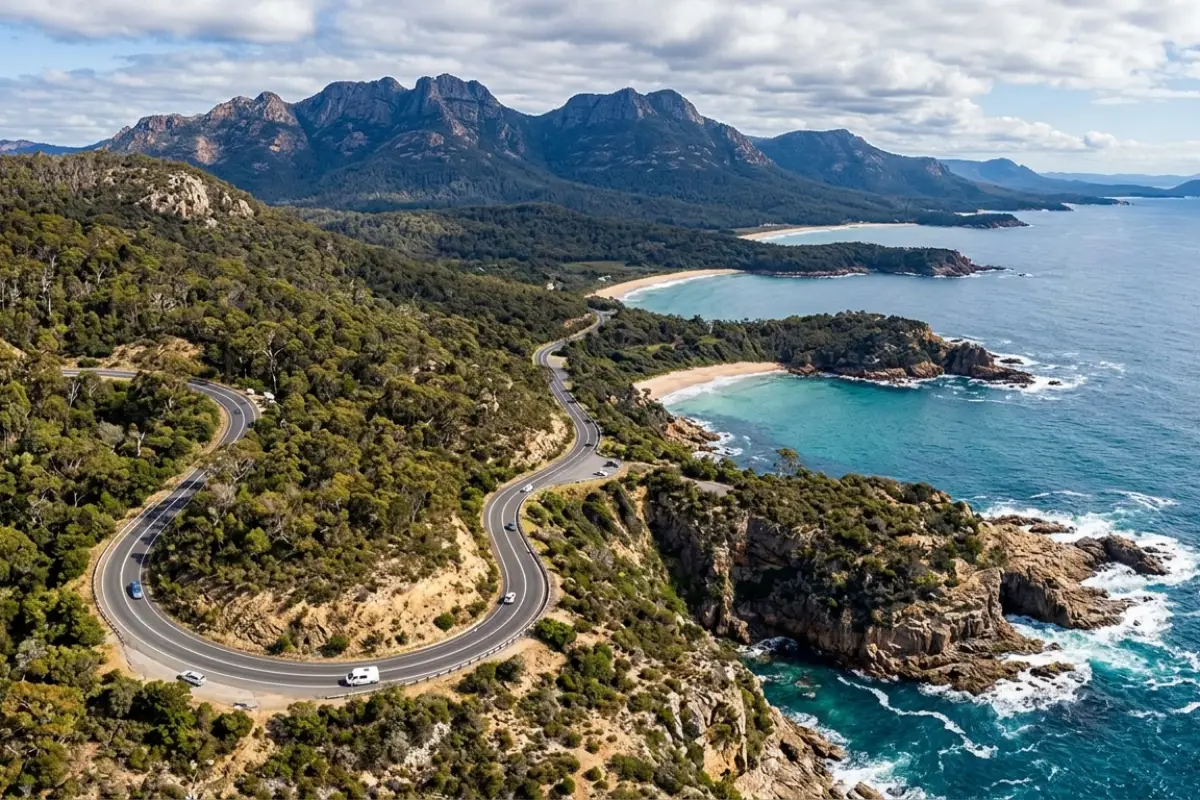
Four days is the minimum for a trip that does not feel rushed, and even then you are choosing one region over the rest. Tasmania is roughly the size of Sri Lanka, but its roads wind around mountains and coastlines instead of cutting straight through them, so distances take longer than the map suggests.
A 10 to 12-day full loop matches what most seasoned visitors land on naturally, which is consistent with the survey data above. That length lets you hit both coasts and the highlands without spending more time driving than exploring.
How to Plan a Trip to Tasmania Step by Step
Planning Tasmania well comes down to four decisions made in the right order. Get the sequence wrong, and you end up with a route that looks fine on paper but burns hours backtracking.
Step 1: Pick Your Season First
Tasmania’s weather swings hard between seasons, and working out the best time to visit Tasmania filters every other decision in your trip. Summer (December to February) brings the longest days and the busiest roads, while winter (June to August) means some alpine areas and Cradle Mountain trails can close without notice.
Shoulder seasons, March to May and September to November, offer a practical middle ground. Fewer crowds, milder weather, and accommodation that is easier to book without months of lead time.
Step 2: Decide Your Loop Direction
Most visitors fly into Hobart and either head east first or northwest first. East first means starting with Freycinet and the coast while you are fresh, looping back through the highlands.
Northwest first means tackling Cradle Mountain and Strahan early, when energy and daylight hours work in your favor for hiking. Either works, but pick one direction and commit, since Tasmania’s road network does not reward zigzagging.
If self-driving and route planning sound like more logistics than a holiday, a guided option removes that decision entirely. Once Were Wild runs small-group, women-only trips that handle the route, pacing, and accommodation, which suits travelers who want the scenery without owning the spreadsheet.
Step 3: Book Accommodation Before Cars
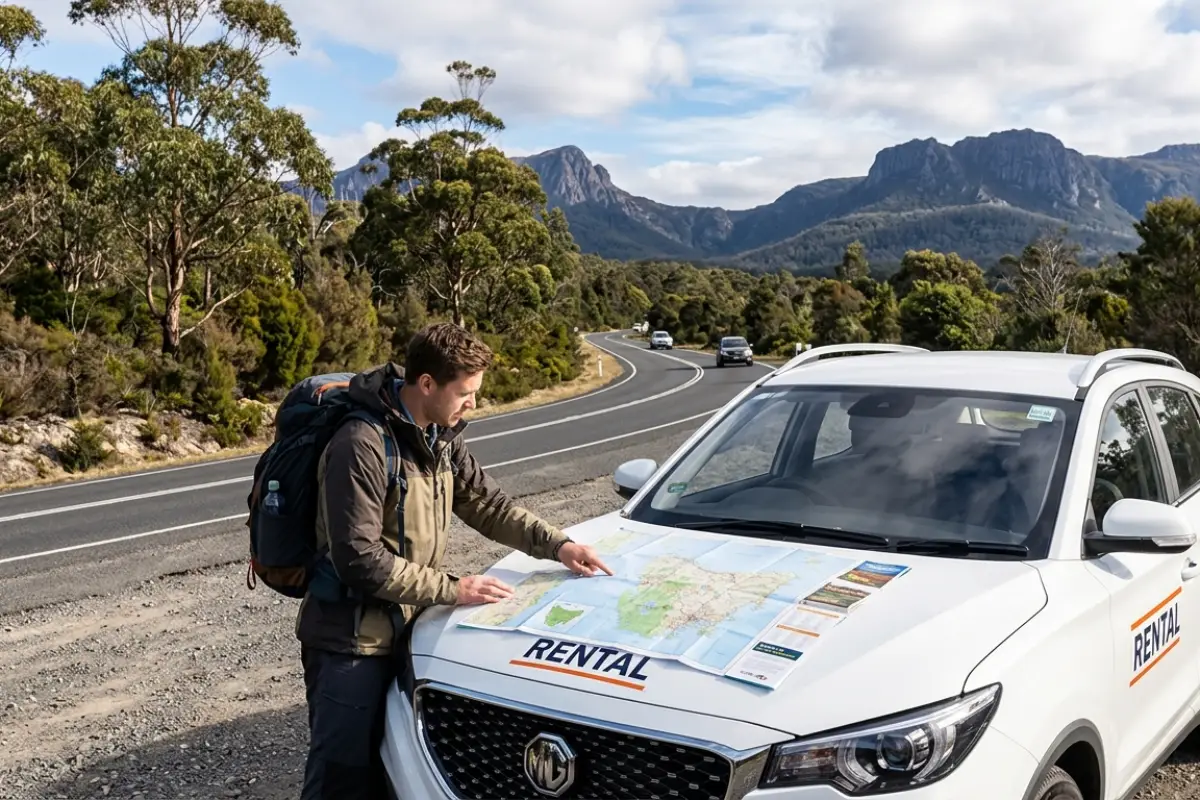
Car rental in Tasmania is flexible almost year-round, but accommodation in small towns like Strahan, Stanley, and Coles Bay sells out fast in peak season. Lock in lodging first, then build your driving days around where you already have a bed.
Step 4: Build in Buffer Days
Tasmania’s weather and trail conditions change quickly enough that a rigid hour-by-hour itinerary often breaks on day three. Leave at least one buffer day in any trip over seven days, ideally placed mid-trip so a missed hike or closed road does not cascade into the rest of your plan.
Sample Route for a 10-Day Trip
This route assumes a Hobart arrival and departure, moving east first.
Days 1 to 2:
Hobart and Richmond, including MONA and the Saturday Salamanca Market if your dates align.
Days 3 to 4:
Freycinet National Park and Swansea, based in Coles Bay for the Wineglass Bay lookout walk.
Days 5 to 6:
Cradle Mountain and Sheffield, with one full day reserved for the Dove Lake circuit.
Days 7 to 8:
Strahan, via the Hellyer Gorge route, including the Gordon River cruise.
Days 9 to 10:
Stanley and the return drive to Hobart via Launceston, with a half-day stop in Launceston’s Cataract Gorge.
This sequence keeps driving days under four hours each, which matters more in Tasmania than the kilometer count suggests.
Final Thoughts
Tasmania’s prettiest towns, Richmond, Stanley, Strahan, Sheffield, and Swansea, each justify a stop for a different reason: heritage, dramatic geology, wilderness, reinvention, or that one perfect view. None of them works as a rushed afternoon stop if you want to actually experience why they made the list.
Official visitor data puts the average stay at close to 9.5 nights, and that number lines up with what a real loop covering both coasts and the highlands actually demands. Four to five days gets you a taste. Ten to twelve days gets you the state.
Plan your season first, pick a loop direction and stick to it, book accommodation before locking in a car, and leave room for at least one buffer day. That order, more than any single tip, is what separates a Tasmania trip that flows from one that fights you the whole way.