Table of Contents
- How to Confirm It’s Actually a Rat
- Why Rats Move Into Air Conditioners
- Where Rats Hide, by Unit Type
- Step-by-Step: Getting the Rat Out
- Why Poison Is the Wrong Tool for an Air Conditioner
- Removal Methods Compared
- Dealing With a Dead Rat Smell in the AC
- Sealing Entry Points So They Never Come Back
- When to Call a Professional
- Conclusion
- FAQs
A rat’s front teeth never stop growing, gaining roughly 12 cm a year, so the animal gnaws constantly to wear them down. Inside your air conditioner, that gnawing lands on wiring insulation, refrigerant line lagging, and drain hoses. Left alone, a single rat can turn a $150 pest problem into a $1,500 repair bill or a burnt-out circuit board.
The good news: getting a rat out of an air conditioner follows a clear sequence. Confirm the animal, cut the power, trap it (never poison it), clean up safely, then seal the gap it used. This guide walks through each step, explains where rats hide in split, ducted, and window units, and tells you honestly when the job belongs to a professional.
How to Confirm It’s Actually a Rat
Possums, geckos, and cockroaches all make noise around Australian air conditioners, and each needs a different response. Confirm before you act, because possums are protected and cannot be trapped without a permit in most states.
Rat-specific evidence looks like this:
- Scratching or gnawing at night. Rats are nocturnal. Steady scratching from the ceiling cavity, wall behind a split system head, or inside the outdoor unit after dark points to rodents.
- Droppings. Rat droppings are dark, spindle-shaped, and 10–20 mm long. You’ll find them near the outdoor unit, along skirting boards, or dropping from ducted vents.
- Ammonia smell from the vents. Rat urine has a sharp, stale ammonia odour. If it comes through the vents when the system runs, urine is inside the ductwork or the unit itself.
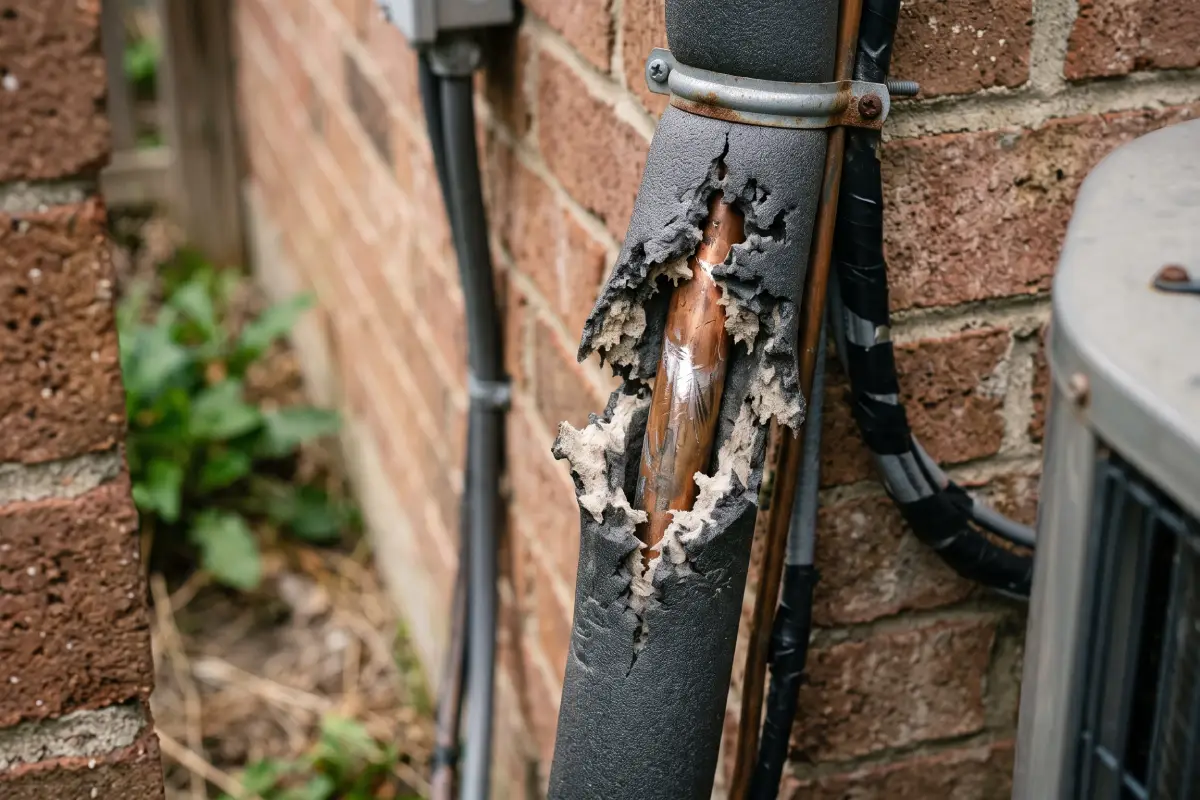
- Chewed cable insulation or lagging. Check the pipe cover (capping) running down your external wall and the cable entry at the outdoor unit for fresh gnaw marks with pale, clean edges.
- Grease marks. Rats follow the same routes and leave dark rub marks along pipes, beams, and duct edges.
Why Rats Move Into Air Conditioners
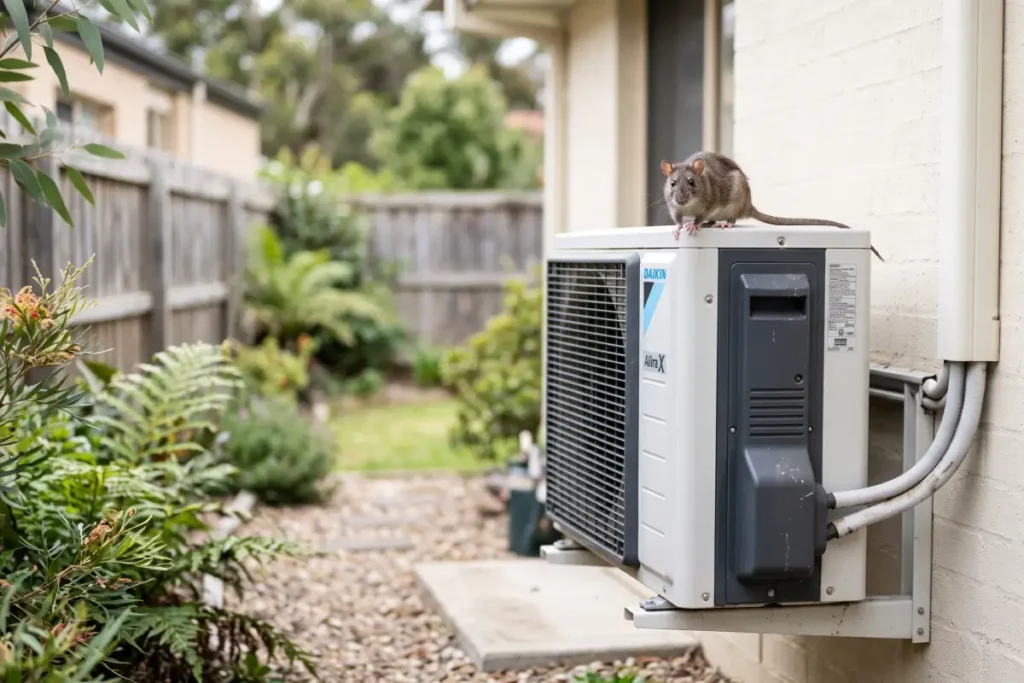
An air conditioner offers everything a rat wants: warmth from the compressor and circuit boards, water from the condensate drain, soft insulation for nesting, and a protected route into the roof cavity along the refrigerant pipes.
These same food, water, and shelter drivers are what attracts mice and rats to a property in the first place, so an air conditioner is rarely the only entry point worth checking.
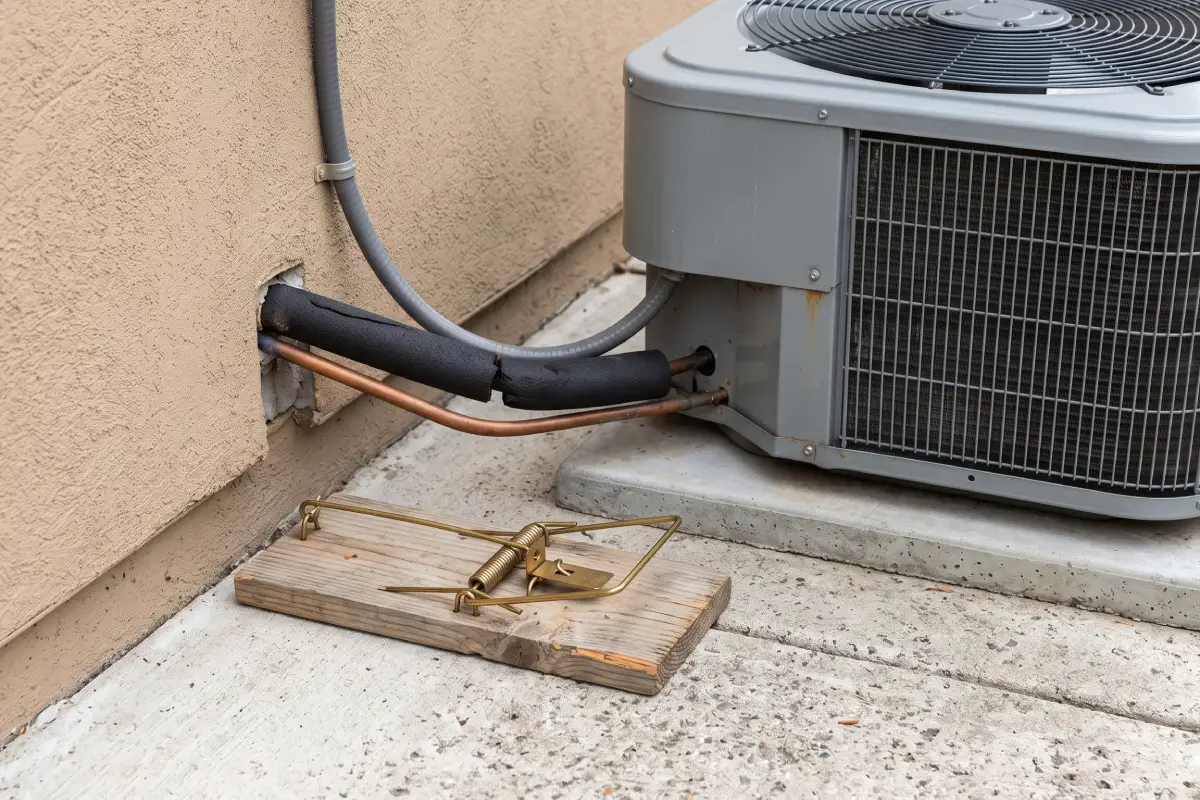
The entry bar is low. US CDC guidance notes a rat can squeeze through a hole about the size of a half-dollar coin, close to an Australian 20-cent piece. The hole cut through your wall for the refrigerant lines is usually bigger than that, and installers often plug it with soft expanding foam that a rat chews through in one night.
Activity spikes in autumn and winter, when roof rats (the climbing species common in Australian suburbs) move indoors for warmth. An outdoor condenser that stays warm, or a roof cavity reached via the pipe run, becomes prime real estate.
Where Rats Hide, by Unit Type
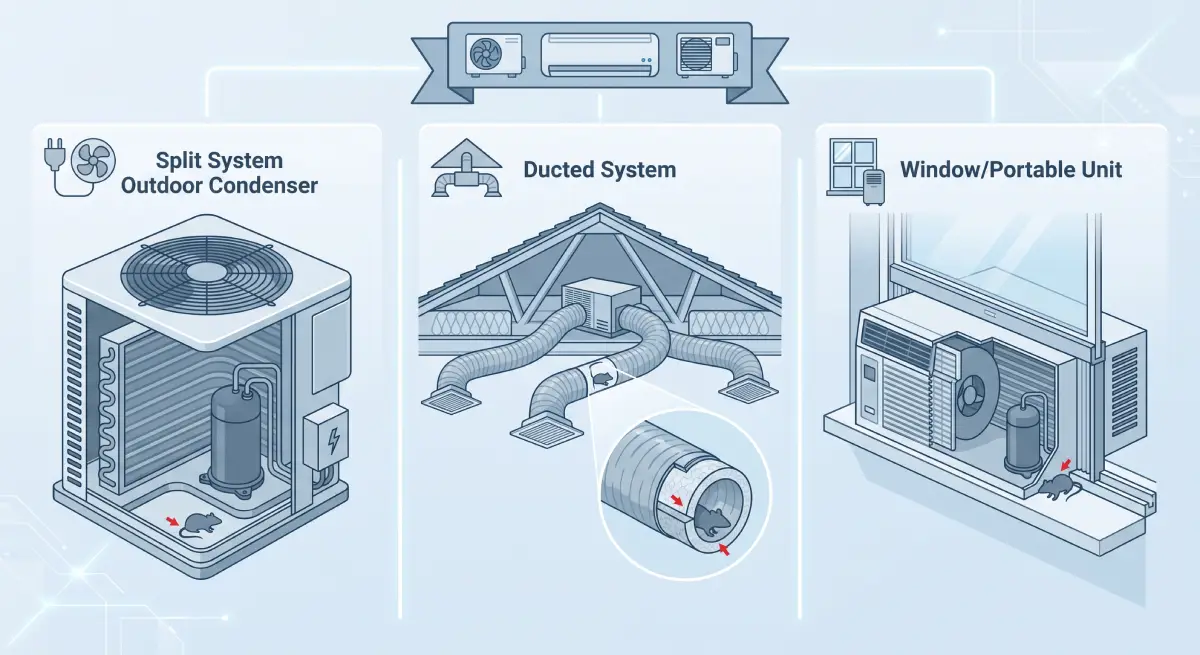
Split systems. The rat rarely lives inside the slim indoor head unit. It nests in the wall or ceiling cavity behind it and travels along the pipe chase. The outdoor unit is the more common nest site, inside the base pan under the compressor, where it’s warm and sheltered.
Ducted systems. Flexible ducting in the roof cavity is the worst-case scenario. Rats tear the foil-and-insulation duct skin to nest inside it, and every hole leaks conditioned air into your roof while spreading contaminated air into your rooms.
Window and portable units. Rats enter through gaps in the mounting frame or the exhaust hose opening. Nests sit directly against the fan and electrical components, so damage shows up fast as rattling, burning smells, or a dead unit.
Step-by-Step: Getting the Rat Out
Step 1: Kill the power
Switch off the unit at the isolator (the switch beside the outdoor unit) and at the circuit breaker. A rat across a live terminal can short the board, and you don’t want the fan spinning up while your hands are inside.
Step 2: Locate the nest, don’t just guess
Open the outdoor unit’s access panel or lift the ducted return grille and look for droppings, shredded insulation, and food debris. Dust a light layer of flour near suspected entry points overnight; footprints confirm an active runway.
Step 3: Set snap traps on the runways, outside the unit
Place two or three snap traps along the walls and pipe runs the rat uses, perpendicular to the wall with the trigger end touching it. Bait with peanut butter and secure the trap so a wounded rat can’t drag it into the ducting. Never place a trap where the fan or moving parts can reach it.
Step 4: Pre-bait for wary rats
Rats are neophobic, meaning they avoid new objects for days. If traps stay untouched for 48 hours, leave them baited but unset for two nights so the rat learns to feed, then set them. Most fresh intrusions resolve within 2–7 days of correct trapping.
Step 5: Remove the nest and droppings safely
Never sweep or dry-vacuum droppings. CDC guidance on rodent cleanup warns that disturbing dried droppings can send airborne particles containing bacteria and viruses into your lungs. Ventilate the area, wear gloves and a P2 mask, soak droppings and nesting material with a household disinfectant or diluted bleach for five minutes, then wipe up with paper towel and bag everything for the bin.
Step 6: Inspect for damage before restoring power
Check every visible cable for exposed copper, the drain hose for chew holes, and the refrigerant lines for damaged lagging. If you see bare wire or suspect the ducting is torn, keep the power off and book a licensed technician; in Australia, electrical and refrigerant repairs legally require one anyway.
Step 7: Seal the entry point the same day
An empty nest with an open door refills. Sealing is covered in detail below, but the rule is simple: metal, not foam.
Why Poison Is the Wrong Tool for an Air Conditioner
Bait blocks look like the easy option, and some HVAC blogs still recommend scattering them around the system. For an air conditioner specifically, poison creates two problems worse than the rat.
First, the rat dies where it lives. Poisoned rats retreat to the nest, which means a carcass inside your ductwork, wall cavity, or condenser base pan. The smell then circulates through every vent in the house for two to four weeks, and finding the body often means cutting open ducts or walls.
Second, most supermarket baits are second-generation anticoagulant rodenticides (SGARs). A poisoned rat stays mobile for days, and Australian research has repeatedly found these poisons accumulating in the owls, kites, and goannas that eat them, including threatened powerful owls. Snap traps kill instantly, keep the body where you placed it, and pass nothing up the food chain.
Removal Methods Compared
| Method | Speed | Risk inside an AC | Cost | Verdict |
| Snap traps | 2–7 days for fresh intrusions | Low if secured away from moving parts | $5–15 per trap | Best DIY option |
| Live cage traps | Slow; rats often avoid them | Low, but you must release 5+ km away or the rat returns | $20–50 | Humane but unreliable |
| Poison bait | Days, but rat dies hidden | High: carcass in ducts, odour through vents, wildlife poisoning | $10–30 | Avoid for AC infestations |
| Ultrasonic repellers | Rarely works at all | None, but rats habituate within days | $20–60 | Not worth it |
| Professional pest control | 1–2 visits | Lowest; includes entry-point proofing | $150–350 typical callout | Best for ducted systems and established nests |
Dealing With a Dead Rat Smell in the AC
If a sweet, sulphurous rotting smell blasts out when the system starts, a rat has already died in the airflow path. Running the unit spreads the odour and any contaminants, so shut it down until the carcass is out.
Follow your nose with the system off: the smell is strongest at the vent or duct section nearest the body. In ducted systems, check accessible duct joins and the return-air box first. In split systems, check the wall cavity behind the head unit and the outdoor unit’s base pan.
Remove the carcass with gloves, disinfect the surface it lay on, and leave the area ventilated. If the body sits deep inside sealed flexible ducting, a duct-cleaning company or pest controller can locate it with an inspection camera far cheaper than cutting ducts open by trial and error.
Sealing Entry Points So They Never Come Back
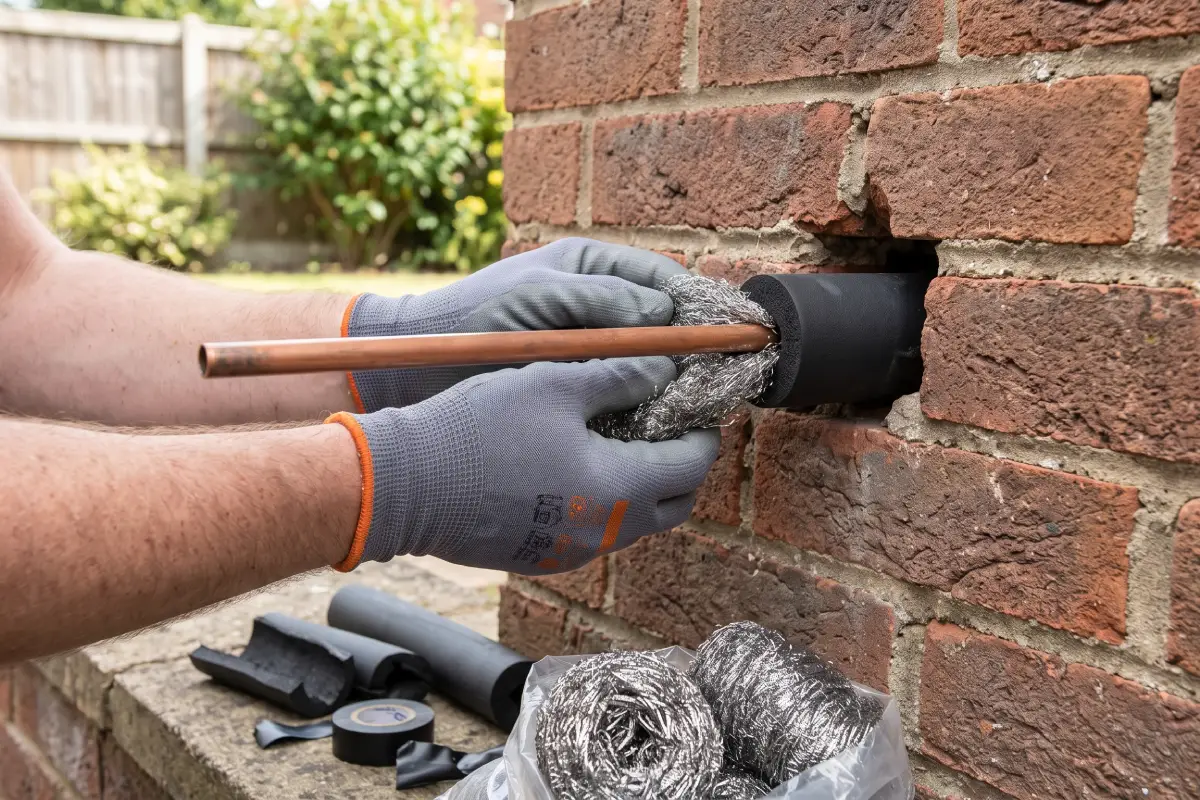
Trapping without sealing buys you a few quiet weeks before the next rat follows the same scent trail in. Seal with materials rats cannot chew: their teeth handle plastic, foam, timber, and thin aluminium easily.
- The pipe penetration hole. Pack the gap around refrigerant lines with stainless steel wool or copper mesh, then mortar or use a rodent-rated sealant over the top. Expanding foam alone lasts one night against a determined rat.
- The outdoor unit. Fit the access panels tightly and screen any openings larger than 6 mm with galvanised steel mesh, keeping mesh clear of coils and airflow paths.
- Ducted vents and returns. Confirm every ceiling and wall grille sits flush, and screen roof-cavity vents, gable vents, and eave gaps with metal mesh.
- The approach routes. Trim branches back at least a metre from the roofline, clear vegetation and stored items 60 cm around the outdoor unit, and fix dripping condensate drains, since standing water attracts rodents.
A twice-yearly service catches chewed insulation and new gaps before they become nests, and technicians see the internal parts you can’t.
When to Call a Professional
Call a licensed pest controller when droppings appear at multiple vents (a sign of a breeding population, not a lone rat), when traps stay empty after two weeks, or when the nest sits inside flexible ducting you can’t reach. If you’re in Brisbane, a local specialist like Rodent Pest Control Brisbane can inspect ducted systems with a camera and handle both removal and entry-point proofing in one visit.
Call an air conditioning technician whenever you find chewed wiring, a torn duct, damaged refrigerant lagging, or the unit trips the breaker. In Australia, only licensed technicians can legally repair the electrical and refrigerant sides of the system, and running a damaged unit risks fire and compressor failure.
For ducted systems with contamination through the vents, add a duct cleaning service after the rats are gone. Trapping removes the animal; it doesn’t remove the urine, droppings, and dander already coating the inside of your ducts.
Conclusion
Getting a rat out of an air conditioner comes down to one sequence: confirm it’s a rat, cut the power, trap it with secured snap traps on its runways, clean droppings wet with gloves and a mask, then seal every gap with metal the same day. Poison stays on the shelf, because a rat that dies inside your ductwork trades a pest problem for a stench problem and puts native owls at risk.
How far you take it yourself depends on the situation, and there’s no single answer for every home. A lone rat in an outdoor unit or behind a split system is a genuine DIY job most people finish within a week. An established nest in ducted roof systems, droppings at multiple vents, or any chewed wiring means professionals will be faster, safer, and usually cheaper than the damage of waiting. Either way, the fix only holds if the entry point gets sealed, so treat trapping and proofing as one job, not two.
FAQs
Can I run the air conditioner while a rat is inside?
No. The fan can strike the animal or its nest, the rat may bridge live terminals, and the airflow spreads urine particles and dander through your rooms. Isolate the unit until the rat and nest are out.
Will a rat leave the air conditioner on its own?
Almost never. The unit gives it warmth, shelter, water from the condensate line, and a safe route to food. Rats abandon a harbor only when it’s disturbed, which is why trapping plus sealing beats waiting.
Do peppermint oil or ultrasonic repellers get rats out of an AC?
Not reliably. Scent deterrents fade within days and rats habituate to ultrasonic devices quickly, especially when the alternative is losing a warm nest. Use them, at most, as a supplement after trapping and sealing, never as the main fix.
How long does a dead rat smell last in the ductwork?
Two to four weeks if the carcass stays put, depending on heat and humidity, and every system starts pushing the odour into your rooms. Removing the body ends the smell within a day or two; masking it does not.
Is rat urine in the air conditioner dangerous?
It can be. Rodent urine and droppings can carry bacteria such as leptospirosis and salmonella, and dried particles trigger allergies and asthma in some people. That’s why cleanup uses gloves, a P2 mask, and wet disinfection instead of sweeping or vacuuming.
Rats keep coming back every winter. Why?
Scent trails from previous rats mark your unit as proven shelter, and the original entry point probably reopened or was sealed with chewable material. Re-seal with steel wool and metal mesh, cut back overhanging branches, and book a pre-winter inspection of the pipe penetration and ducting.