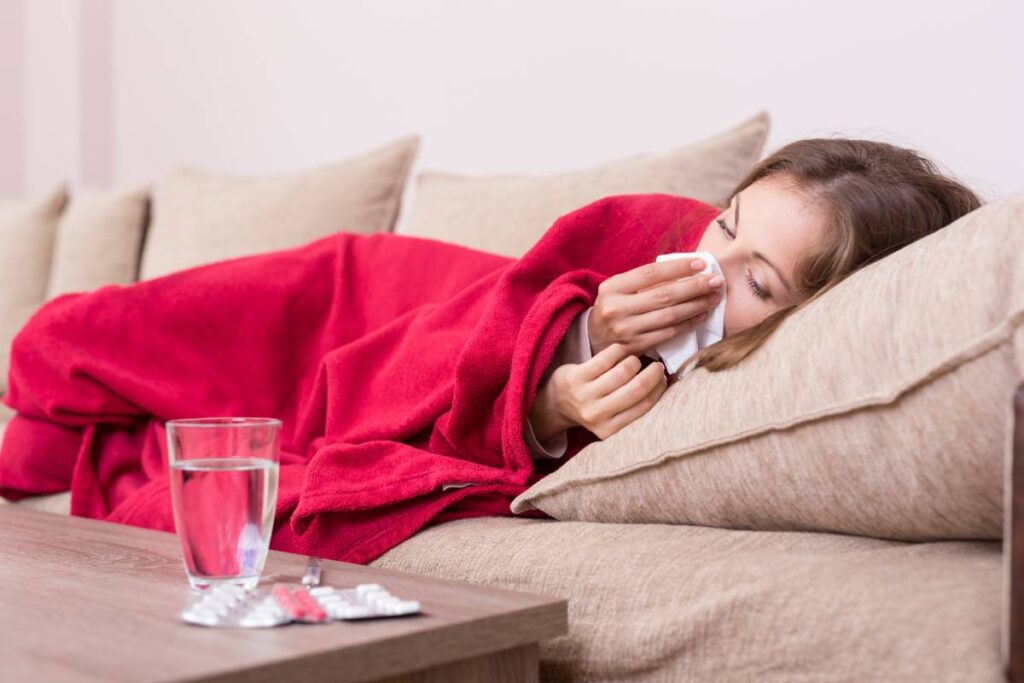
Colds, flu, and COVID share symptoms, but patterns help. Colds usually start slowly with a runny nose and mild fatigue. Flu hits suddenly with high fever and body aches. COVID may include loss of taste or smell and longer-lasting symptoms. Testing is the only reliable way to be sure, especially if symptoms worsen.
You wake up with a sore throat, body aches, and a headache. Is this “just a cold,” a nasty super flu, or COVID? The symptoms blur together, and the wrong guess could put your family—or coworkers—at risk.
I’ll walk you through clear, practical ways to tell the difference, when to test, and when to seek care—so you can act confidently, not anxiously.
Table of Contents
- Why It’s Hard to Tell
- Symptom
- Cold vs Flu vs COVID: Hallmark Signs
- Onset & Timing: The Hidden Clue
- What Is a “Super Flu”?
- Testing: When, Which Test, and Why
- When to Seek Medical Care
- At-Home Care & Protecting Others
- Common Myths—Busted
- Conclusion
- FAQs
Why It’s Hard to Tell
You’re not imagining it—these illnesses overlap. Fever, cough, sore throat, fatigue, and congestion can appear in all three. New variants and intense flu seasons add to the confusion. That’s why pattern recognition + testing beats guessing.
Symptom
Use this as a fast triage guide (not a diagnosis):
- Cold: Gradual start, runny or stuffy nose, sneezing, mild fatigue
- Flu: Sudden onset, high fever, severe body aches, exhaustion
- COVID: Fever or chills, cough, fatigue, loss of taste/smell, symptoms may last longer
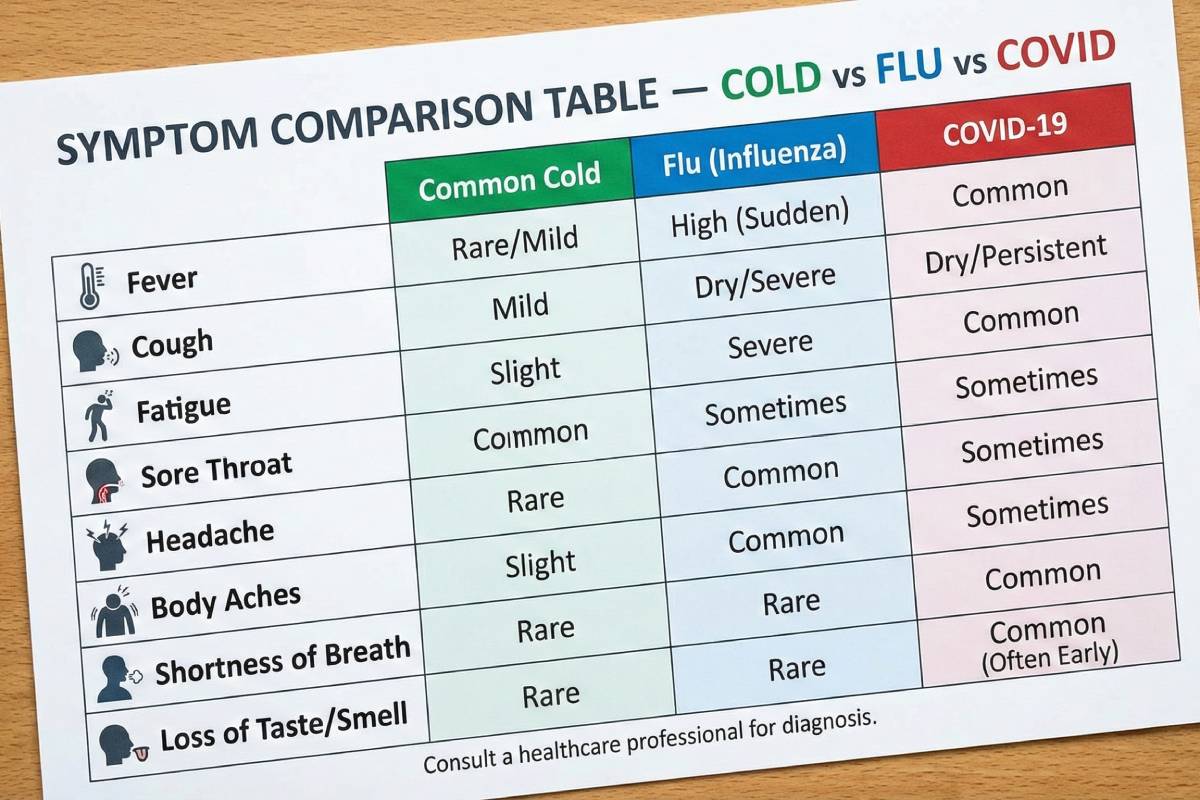
Cold vs Flu vs COVID: Hallmark Signs
Common Cold
- Onset: Gradual (1–3 days)
- Fever: Rare or low-grade
- Nose: Runny/stuffy, sneezing common
- Energy: Tired but functional
- Duration: 5–10 days
Key takeaway: If it creeps in and stays mild, it’s often a cold.
Influenza (Flu)
- Onset: Abrupt—hours, not days
- Fever: High (38–40°C / 100–104°F)
- Body aches: Severe
- Energy: Wiped out
- Duration: 1–2 weeks (fatigue can linger)
Key takeaway: Sudden, intense symptoms point to flu.
COVID-19
- Onset: Variable (2–14 days after exposure)
- Fever: Common, but not universal
- Unique clue: Loss of taste or smell
- Respiratory: Cough, shortness of breath
- Duration: Can be prolonged
Key takeaway: COVID can mimic flu—or start subtly—testing matters.
Onset & Timing: The Hidden Clue
If symptoms hit like a truck overnight, think flu.
If they crept up over days, think cold.
If timing doesn’t fit—or symptoms last longer than expected—consider COVID and test.
What Is a “Super Flu”?
“Super flu” isn’t a medical diagnosis. It’s a media term used when dominant flu strains cause unusually severe seasons—more hospitalizations, stronger symptoms, faster spread. Clinically, it’s still influenza, but harder-hitting, especially for older adults, kids, pregnant people, and those with chronic conditions.
Bottom line: A brutal flu can feel “worse than COVID.” Severity alone doesn’t identify the virus.
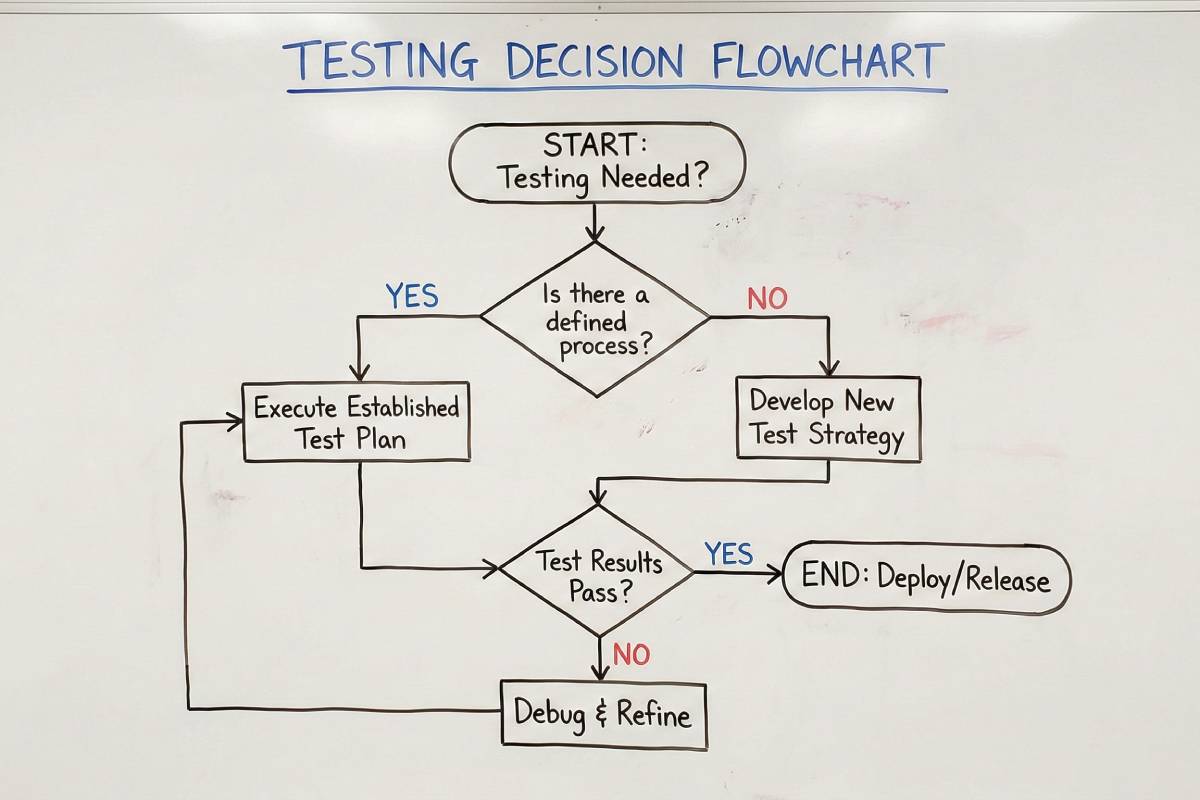
Testing: When, Which Test, and Why
When should you test?
- You have moderate to severe symptoms
- You were recently exposed
- You’re around high-risk people
- Symptoms don’t match a simple cold
Which test?
- Rapid antigen test: Fast, convenient; best when symptoms are present.
- PCR test: Most accurate; use if rapid tests are negative, but suspicion remains
If you’re deciding which test to use or want a simple home-check routine, our guide to at-home health monitoring and self-tests explains when rapid tests help and what to track while you wait for results.
Why test at all?
- Confirms what you have
- Guides isolation and treatment
- Protects vulnerable people around you
When to Seek Medical Care
Get urgent help now if you have:
Breathing difficulty isn’t always caused by an infection — anxiety or underlying asthma can produce similar chest tightness and wheeze. If your breathing feels tight without fever or other infection signs, see our piece on anxiety-induced asthma and coping strategies for immediate steps you can take while you decide whether to test or seek care.
- Trouble breathing or shortness of breath
- Persistent chest pain or pressure
- New confusion or inability to stay awake
- Bluish lips or face
- Symptoms rapidly worsening
Call a clinician promptly if:
- Fever lasts more than 3 days
- You’re pregnant, immunocompromised, or have a chronic illness
- Symptoms don’t improve after a week
At-Home Care & Protecting Others
Care basics (for mild cases):
- Rest and hydrate
- Fever reducers (as directed)
- Throat lozenges, saline spray
- Light meals
Protect others:
- Stay home when sick
- Wear a mask around people
- Improve ventilation
- Wash hands frequently
If your symptoms began or feel worse while indoors, check whether air conditioning or poor indoor air quality might be irritating your airways — our quick guide explains common AC triggers and easy fixes.
Pro tip: Even “just a cold” spreads easily. Courtesy protects everyone.
Common Myths—Busted
- “I don’t have a fever, so it’s not COVID.” False. Fever isn’t required.
- “Severe symptoms mean COVID.” Not always. Flu can be brutal.
- “I tested negative once, I’m clear.” Early testing can miss infection—retest if symptoms persist.
Conclusion
When you’re sick, certainty beats guessing. Pay attention to onset, hallmark symptoms, and duration, but remember—testing is the final answer. Acting early protects your health and the people around you.
Still unsure about your symptoms? Share your experience in the comments or talk with a healthcare professional today—because peace of mind is part of recovery.
FAQs
1) Can symptoms alone confirm whether I have COVID or the flu?
No. Symptoms overlap too much. Testing is the only reliable confirmation, especially during peak seasons.
2) How soon should I test after symptoms start?
Test as soon as symptoms appear. If negative but symptoms continue, repeat in 24–48 hours or get a PCR.
3) Is loss of taste or smell only linked to COVID?
It’s most strongly associated with COVID, but not everyone experiences it—and some respiratory infections can affect smell temporarily.
4) Can I have flu and COVID at the same time?
Yes. Co-infection is possible, which is another reason testing matters if you’re very sick.
5) When can I return to work or school?
Return when fever-free for 24 hours without medication and symptoms are improving—follow local guidance, especially after COVID.