Table of Contents
- The Short Answer
- Tasmania’s Four Seasons at a Glance
- Summer (December to February): Peak Weather, Peak Crowds
- Autumn (March to May): The Smart Traveler’s Window
- Winter (June to August): Cheapest Fares, Real Trade-Offs
- Spring (September to November): Wildlife and Wildflowers
- Best Time by Traveler Type
- What to Pack, No Matter the Season
- Conclusion
The Short Answer
If you want one number: book for December through March. That window delivers the warmest, driest weather Tasmania offers, and it lines up with the island’s actual peak demand.
But “best” depends on what you’re optimizing for. A hiker chasing dry trails wants different months than a photographer chasing autumn color or a budget traveler chasing cheap accommodation.
Tasmania saw a record 453,600 visitors between December 2024 and February 2025, a 7% jump from the prior summer, according to the Tasmanian Visitor Survey reported by the Premier of Tasmania. That’s the proof: summer is popular for a reason, but popular also means crowded and pricier. This guide breaks down exactly what each season trades off, so you book the right month instead of just the busiest one.
Tasmania’s Four Seasons at a Glance
Tasmania sits at the bottom of Australia, between latitudes 40 and 43 degrees south. That position means the weather here behaves more like coastal New Zealand or southern England than mainland Australia. Expect mild summers, cool winters, and rain that can show up in any month.
The island also runs multiple microclimates at once. The east coast around Hobart and Freycinet stays drier. The west coast around Strahan and Queenstown catches the brunt of Antarctic-driven westerly winds and can see triple the annual rainfall of the east.
| Season | Months | Avg. Temp Range | Crowd Level | Best For |
| Summer | Dec–Feb | 12°C–24°C | Highest | Hiking, beaches, festivals |
| Autumn | Mar–May | 7°C–20°C | Moderate, dropping | Wine harvest, fagus foliage, road trips |
| Winter | Jun–Aug | 3°C–11°C | Lowest | Cheap fares, Dark Mofo, aurora viewing |
| Spring | Sep–Nov | 7°C–17°C | Low, rising | Whale migration, wildflowers, baby wildlife |
Summer (December to February): Peak Weather, Peak Crowds
Summer is Tasmania’s driest season. Average highs sit between 20°C and 24°C along the coast, with the Derwent Valley occasionally pushing past 25°C on a hot inland day.
This is also when nearly every popular trail and beach is at its busiest. The Three Capes Track and Overland Track fill up months ahead, and accommodation on the east coast books out early for Christmas and New Year.
Book your campsite or hut pass for the Overland Track at least four to six months out if you’re targeting January, and pack accordingly for overnight hiking since huts don’t provide meals. Walk-up availability during peak summer is close to zero on the most popular multi-day tracks.
Festival season runs heavy here, too. Taste of Tasmania, the Sydney to Hobart Yacht Race finish, and the Cygnet Folk Festival all land in this window, which adds atmosphere but also pushes Hobart accommodation prices up by 20 to 40 per cent compared to shoulder months.
Autumn (March to May): The Smart Traveler’s Window
Autumn is where most experienced Tasmania travelers actually book. Early March still carries summer warmth, with highs near 22°C, then cools gradually through April and May.
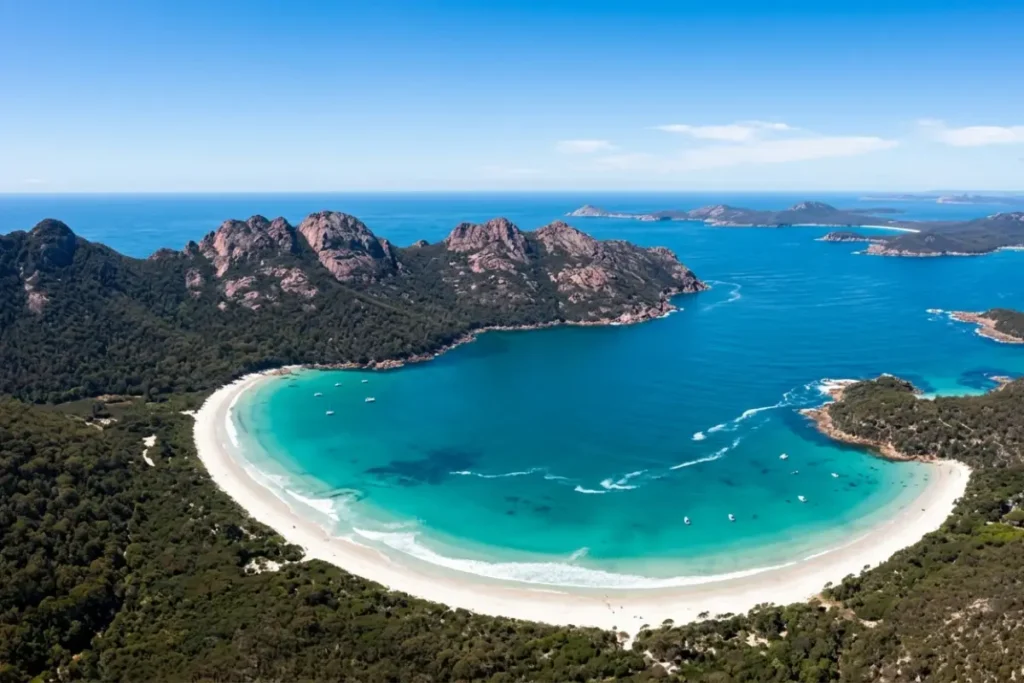
Crowds thin out noticeably after mid-March. You’ll find shorter queues at MONA, easier parking at Wineglass Bay lookout, and accommodation rates that drop from peak pricing.
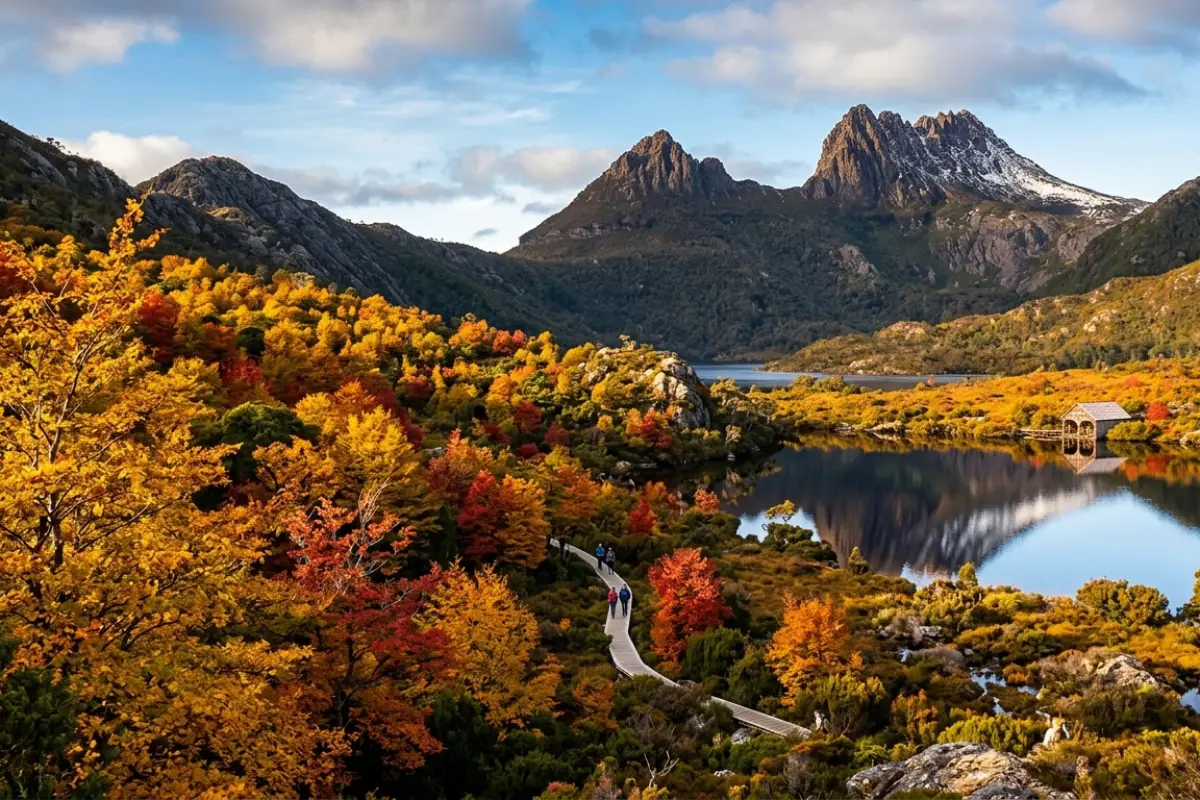
April brings the one event you cannot get anywhere else in Australia: the turning of the fagus. This is the country’s only native winter-deciduous tree, and it turns gold, red, and orange across Cradle Mountain and the Central Highlands for roughly two to three weeks.
Wine harvest also peaks in March and April. The Tamar Valley, Coal River Valley, and Huon Valley all run cellar door events and harvest festivals, with produce at its freshest point of the year.
The trade-off is rain. Autumn brings more variable weather than summer, and you’ll want a packed rain jacket even on days that start clear.
Winter (June to August): Cheapest Fares, Real Trade-Offs
Winter is Tasmania’s quiet season, and that quiet comes with a real price advantage. Flights and accommodation both hit their lowest annual rates, and popular sites like Cradle Mountain see a fraction of summer foot traffic.
Average highs drop to 3°C to 11°C, with snow common on Mount Wellington, Ben Lomond, and the Central Plateau. Some high-altitude roads close temporarily after heavy snowfalls.
Dark Mofo, Hobart’s winter arts festival built around the solstice, runs in June and draws a different visitor entirely: one chasing fire, food, and atmosphere rather than hiking weather. The Winter Feast and the famous nude solstice swim happen during this window.
Winter is also prime time for spotting the Aurora Australis from dark, remote coastal locations on clear nights, something summer’s shorter, brighter nights make far less likely.
If your trip depends on multi-day hiking or beach weather, winter is the wrong call. If you want cheap fares, fewer people, and don’t mind the cold, it’s underrated.
Spring (September to November): Wildlife and Wildflowers
Spring starts cool and unpredictable in September, then warms steadily through October and November. This is whale migration season, with southern right and humpback whales tracking up the east coast.
Wildflowers carpet alpine meadows by October, and you’ll start seeing baby wallabies, pademelons, and wombats around dawn and dusk. October specifically records the lowest visitor numbers of the entire year, making it the single quietest month to see Wineglass Bay or the Bay of Fires.
Wine events pick up again in October and November with Great Eastern Wine Week and Spring in the Vines across the Coal River and Derwent valleys. This mirrors autumn’s harvest energy but with blossom instead of foliage.
Best Time by Traveler Type
Match your priority to the window that actually serves it.
Want guaranteed warm, dry weather:
Book December through February. Accept the crowds as the cost of reliability.
Want lower prices and fewer people without giving up good weather:
Book March to mid-April. This is the highest-value window on the calendar.
Want the cheapest possible trip:
Book July or August. Expect cold, wet conditions and plan indoor and short-walk activities.
Want wildlife or wildflowers:
Book October or November for whale migration and spring blooms with minimal crowds.
Want unique foliage you can’t get anywhere else in Australia:
Book the second half of April for the fagus turning.
What to Pack, No Matter the Season
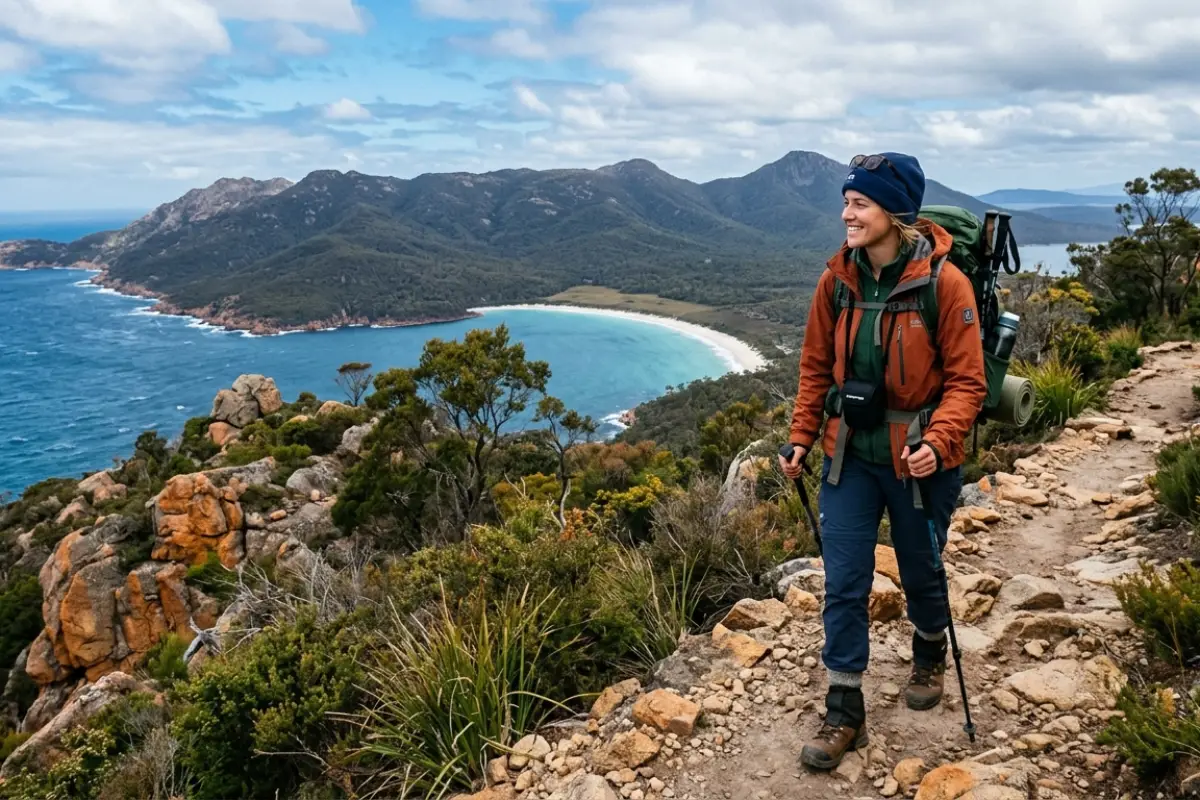
Tasmania’s weather changes fast, regardless of season, so a few items belong in every suitcase. Pack a waterproof jacket even in summer, since westerly weather systems can bring sudden showers any month.
Layers matter more than any single heavy item. Mornings run cold even in January, so a fleece or light sweater for early starts and after-dark temperature drops is non-negotiable.
Conclusion
There is no single best month for Tasmania. There’s a best month for what you specifically want.
December through February gives you the warmest, driest weather and the festival calendar to match, but you’re sharing the island with record crowds, over 450,000 visitors in a single summer in the most recent data. March to mid-April gives you nearly the same weather with a fraction of the people and lower prices, making it the strongest all-around pick for most travelers. Winter rewards budget travelers and aurora chasers willing to trade warmth for savings and solitude. Spring delivers whales and wildflowers to anyone willing to start cool in September.
Pick the season that matches your priority, not the one everyone else is booking, and build your itinerary around it.